Visiting the Imperial Enclosure is a quintessential highlight of any trip to Hue City. This historic site, known for its impressive architecture and beautifully maintained grounds, stands as a testament to Vietnam’s rich cultural heritage. Situated within Hue Imperial City, the Imperial Enclosure offers an immersive historical experience that can easily occupy an entire day of exploration. Here’s everything you need to know about this remarkable destination.
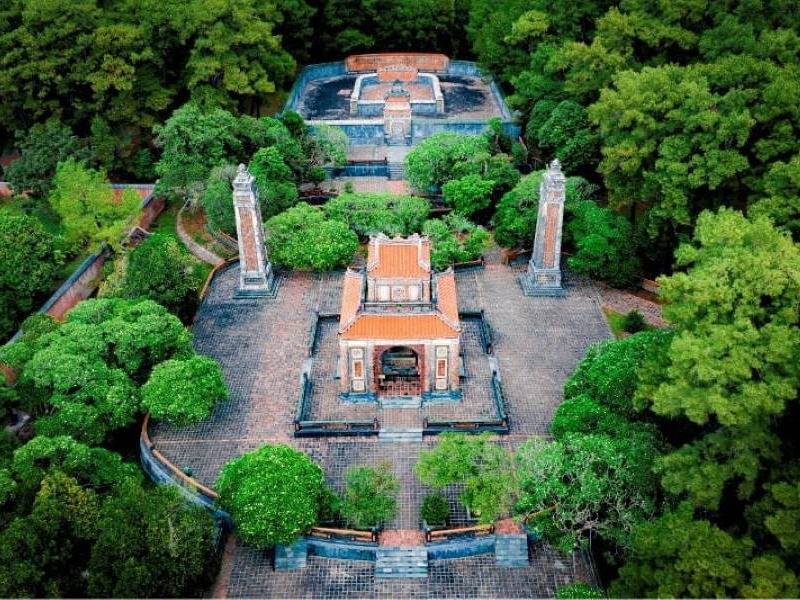
Location: North of the Perfume River, Hue City, Thua Thien-Hue Province
Opening Hours: 8:00 AM – 5:30 PM
Entrance Fee: VND 200,000 for adults, VND 30,000 for children
1. Historical Significance of the Imperial Enclosure
The Imperial Enclosure is renowned for its extraordinary preservation over nearly two centuries. Construction of this monumental structure began in 1805 and concluded in 1832, spanning the reigns of two Vietnamese emperors, Gia Long and Minh Mang. It is one of the largest architectural projects of its time in Vietnam, requiring the labor of thousands of workers and the use of millions of cubic meters of rock. Tasks included trench digging, river filling, relocation of graves, and extensive wall building.
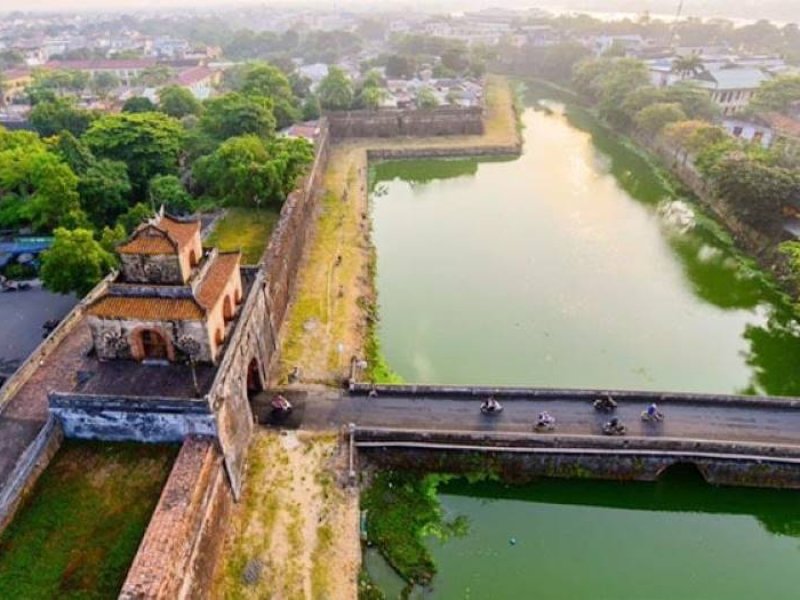
Emperor Gia Long selected the location for the Imperial Enclosure, situating it on a vast tract of land on the northern bank of the Huong (Perfume) River, now known as the Imperial City. The site was strategically placed behind the 100-meter-tall Ngu Binh Mountain, which features a flat top and picturesque shape, acting as a natural barrier for the citadel. The mountain’s flanks, Hen Hillock and Da Vien Hillock, symbolizing the Green Dragon and the White Tiger respectively, were believed to represent the emperor’s power.
2. Architectural Structure of the Imperial Enclosure
The most striking feature of the Imperial Enclosure is its formidable wall, which stretches for 10 kilometers, standing 6.6 meters high and 21 meters thick. Initially constructed from mud during Gia Long’s reign, the wall was later reinforced with bricks. Surrounding the wall is a defensive trench system.

Entrance to the site is possible through one of its 10 gates: Chinh Dong, Chinh Nam, Chinh Tay, Chinh Bac, Tay Bac, Tay Nam, The Nhon, Quang Duc, and Dong Nam gates. The Imperial Enclosure comprises the Imperial City and the Purple Forbidden City.
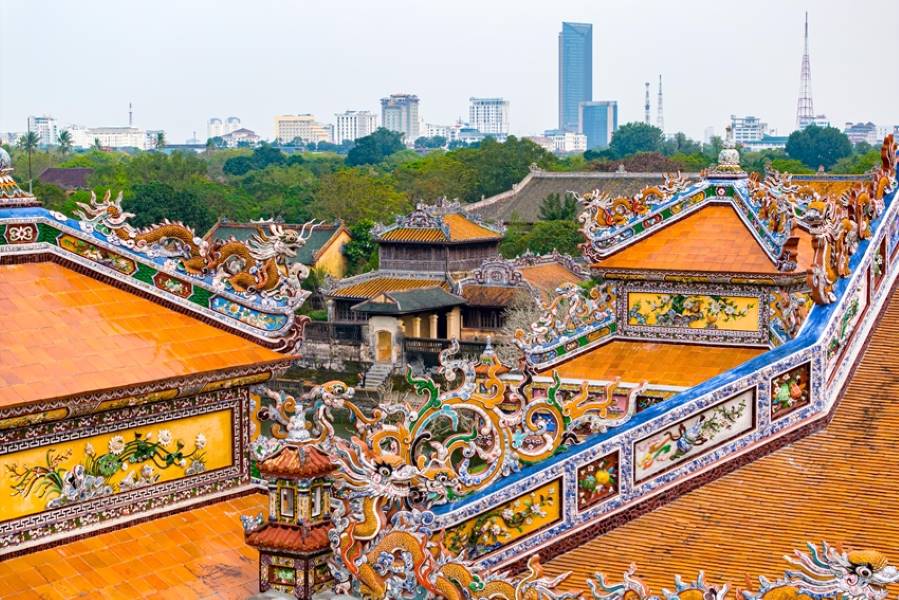
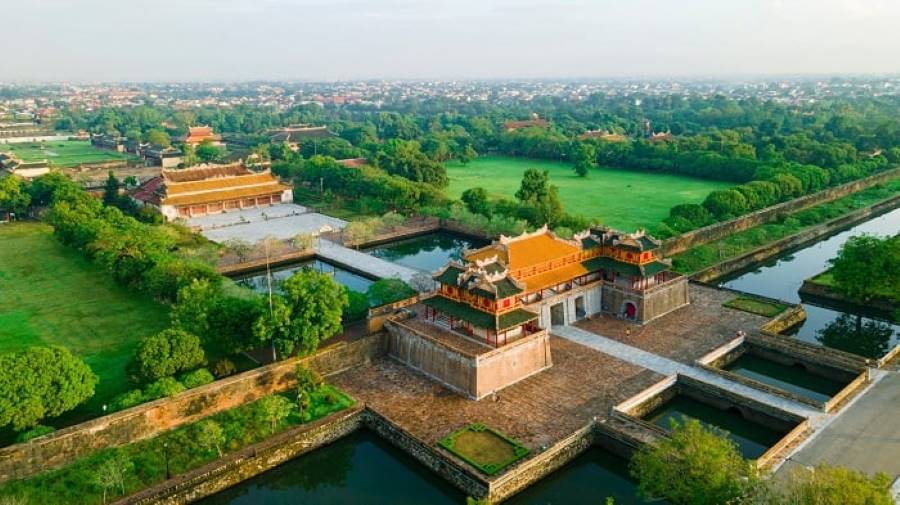
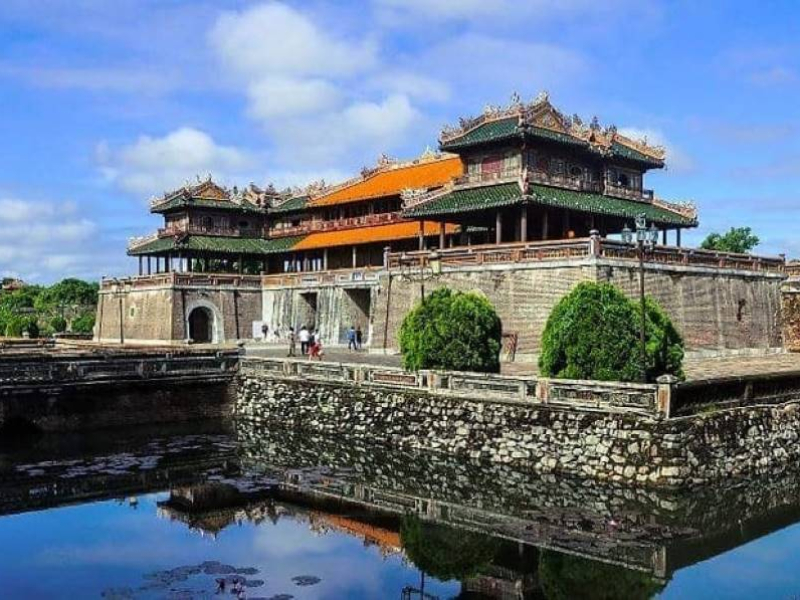
The Imperial City is designed to protect the most critical areas, featuring four main gates, with the Meridian Gate (Ngo Mon) being the primary entrance. The entire palace complex is built in an axisymmetric style, with special buildings for the emperor located centrally. The layout adheres to traditional principles, with structures for men on the left and for women on the right. The buildings are harmoniously integrated with nature, featuring gardens, lakes, shady trees, and stone bridges. High-quality materials were used in the construction, including floor tiles from Bat Trang, Vietnam’s most famous pottery village.
The Purple Forbidden City, also known as Tu Cam Thanh, was the exclusive domain of the emperor and the royal family. This area, restricted to unauthorized entry, includes numerous buildings of various sizes, totaling around 50. Within this enclave, the Can Chanh Palace served as the emperor’s workplace, while the Noi Dinh area was reserved for dining and leisure. The Can Thanh Palace, surrounded by a courtyard and a scenic lake, was the emperor’s residence. The emperor’s wives lived in the Khon Thai Palace.
3. Notable Sites within the Imperial Enclosure
When visiting the Imperial Enclosure, several key sites should not be missed:
- Ngo Mon (Meridian Gate): Located in the southern part of the complex, this is the largest of the four main gates. Known for its architectural grandeur, Ngo Mon reflects the finest elements of Nguyen Dynasty architecture, despite similarities with Chinese designs.

Ngo Mon (Meridian Gate)-Source: Collected - Thai Hoa Palace: One of the most significant structures in the Imperial City, Thai Hoa Palace symbolizes supreme harmony between yin and yang and between humans and nature. It features typical royal architecture adorned with lacquer, gilding, and bronze artifacts. The throne used by all Nguyen emperors is displayed here, surrounded by intricate dragon and cloud motifs.
Thai Hoa Palace - Hien Lam Pavilion: Built during Minh Mang’s reign, this three-story wooden structure honors the emperors of the Nguyen Dynasty and their meritorious officials. It is renowned for its artistic and technical craftsmanship, which has ensured its preservation for nearly two centuries.

4. Travel Tips
- Getting There: While flying from Hanoi or Ho Chi Minh City to Hue is the fastest option, taking an overnight train can provide a memorable travel experience through Vietnam.
- Accommodation: Hue offers a variety of lodging options to suit different budgets, from budget-friendly to luxurious. Staying near the Perfume River provides the best experience of Hue’s ambiance.
- Dress Code: When visiting temples or pagodas, ensure your clothing is respectful. Avoid shorts above the knee or short dresses, as these are considered inappropriate.
Overall, the Imperial Enclosure is a highlight of any trip to Hue City, offering a deep dive into Vietnam’s historical and cultural richness. Don’t miss the opportunity to explore this exceptional site. For more information or any queries, feel free to contact Vietnam Discovery Tours.
Planning a trip to Hue? Browse our Hue tours.