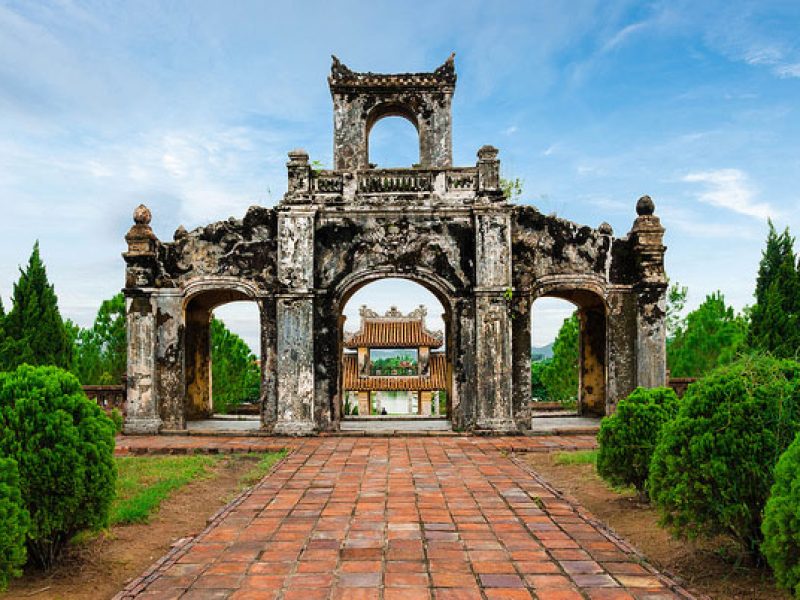
Located on the serene banks of the Perfume River, the Hue Temple of Literature (Van Mieu Hue) is a historical gem of Vietnam. Just a kilometer away from the iconic Linh Mu Pagoda, this Confucian monument offers a rich insight into the country’s cultural and educational heritage. Perfect for Vietnam Discovery Tours explorers.
1. Location and History of Hue Temple of Literature
The Hue Temple of Literature, locally known as Van Mieu Hue, is an iconic site situated along the scenic Perfume River, about 5.7 kilometers from Hue city center. This sacred monument, initially built in 1908 during the reign of King Gia Long, stands west of the Citadel and is only 1 km from the renowned Linh Mu Pagoda.
Address:
Hue Temple of Literature (Van Mieu Hue)
Perfume River Bank, Kim Long Street, Hue, Thua Thien Hue, Vietnam.
As a Confucian temple, it follows the tradition of honoring the great Chinese philosopher Confucius and notable scholars, a practice adopted widely in several Asian countries, including Vietnam, China, Korea, and Japan. Hue’s Temple of Literature served as a place to celebrate academic achievements and to honor those who contributed to Vietnam’s educational and cultural history, particularly during the Nguyen Dynasty.
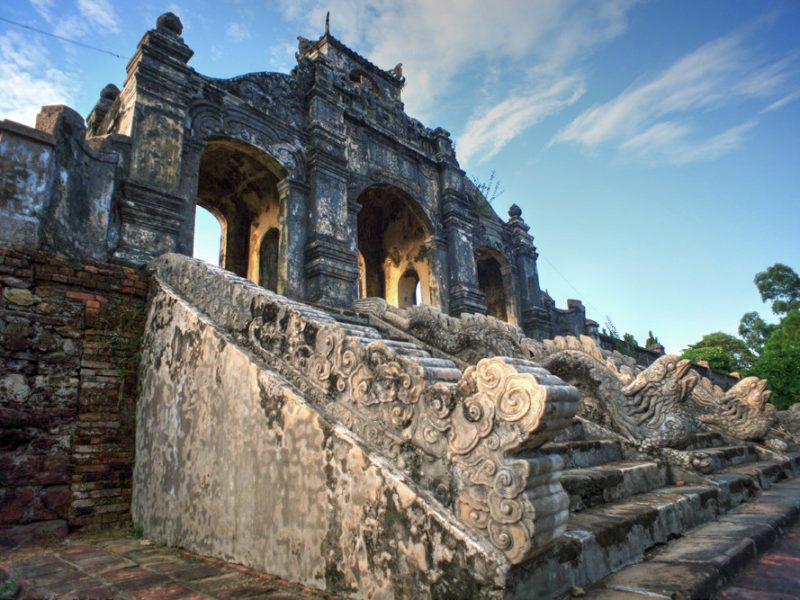
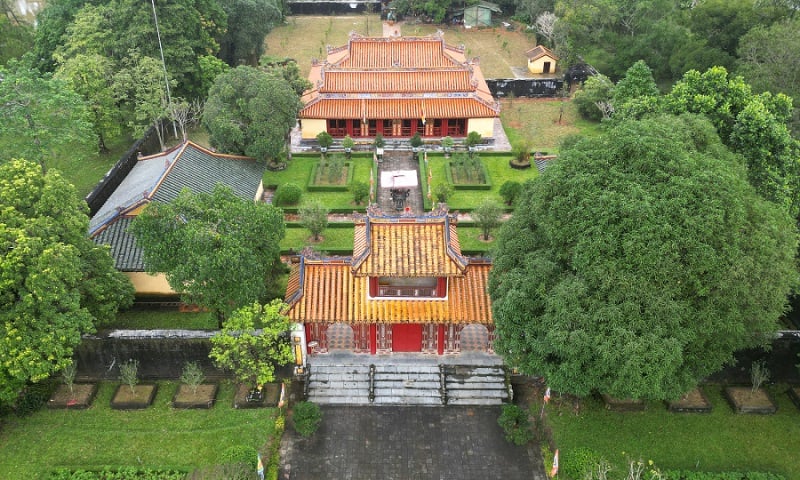
Originally constructed on a hill, the temple has undergone multiple renovations, especially after sustaining damage during the colonial era when French troops used the temple grounds as a military barracks. Despite this, the Hue Temple of Literature still preserves many of its architectural features, with 50 structures remaining, including the worshiping hall dedicated to Confucius and steles of academic excellence.
2. Architectural Highlights of the Hue Temple of Literature
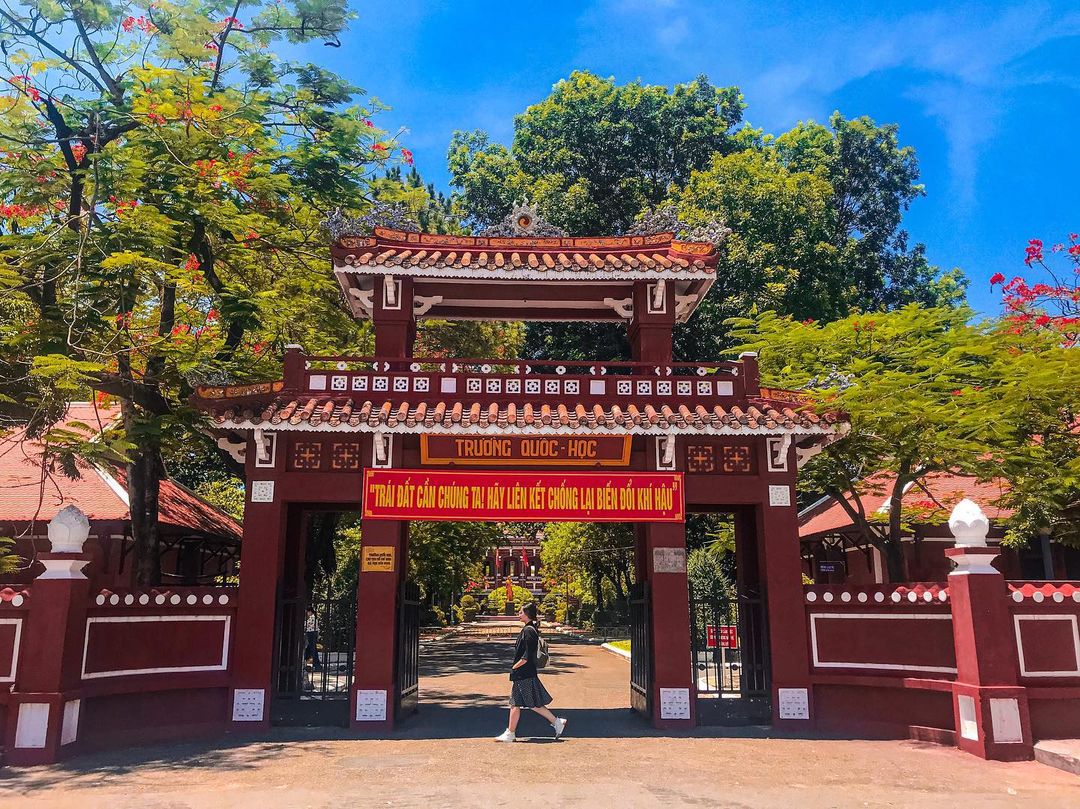
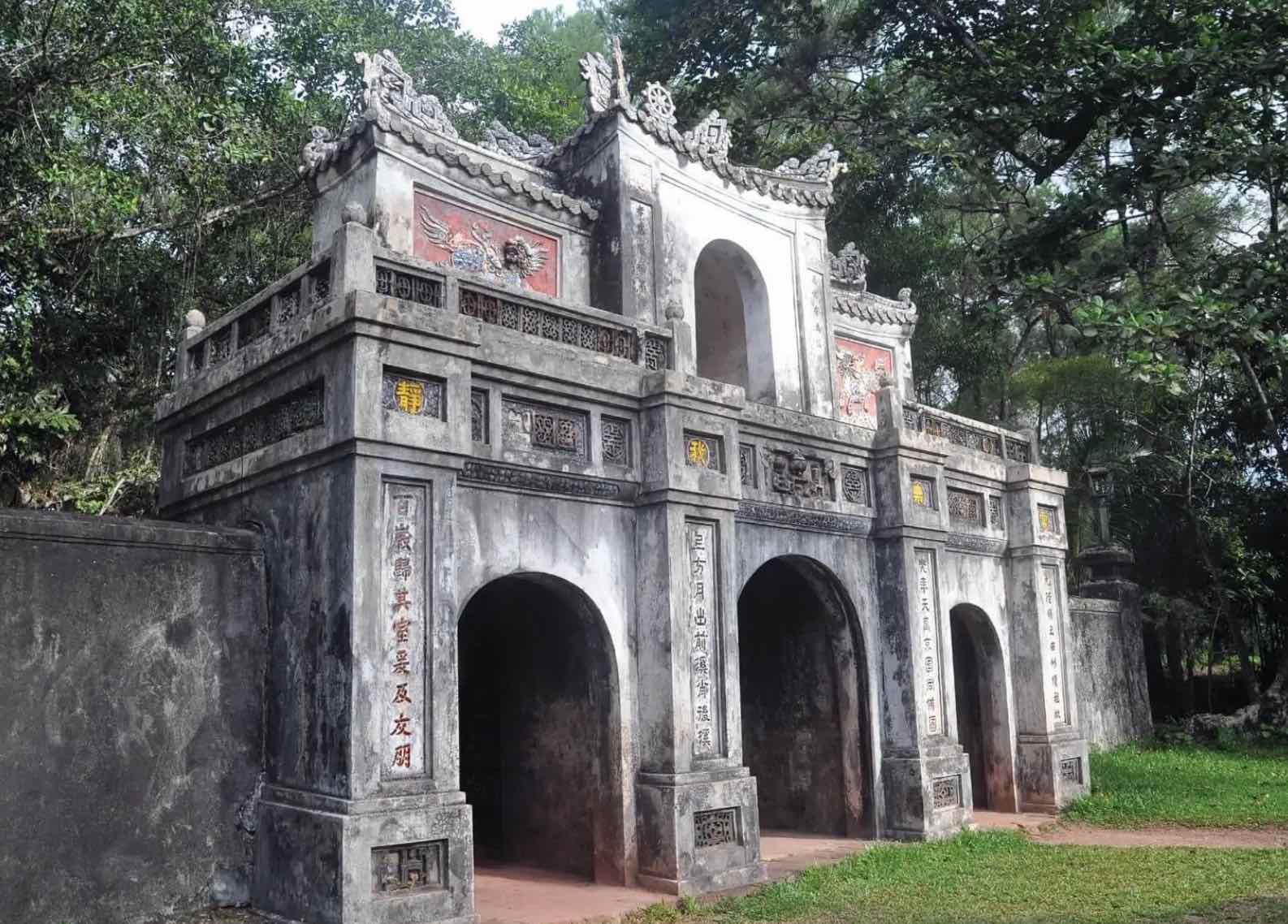
Upon entering the Temple of Literature, visitors are greeted by four towering pillars standing by the riverbank, symbolizing the grandeur of the site. The inscriptions on these pillars bear phrases that reflect the guiding principles of Confucianism and the honor of intellectual achievement. These inscriptions translate to “The principles in the world” and “Higher than ever before,” underlining the temple’s educational significance.
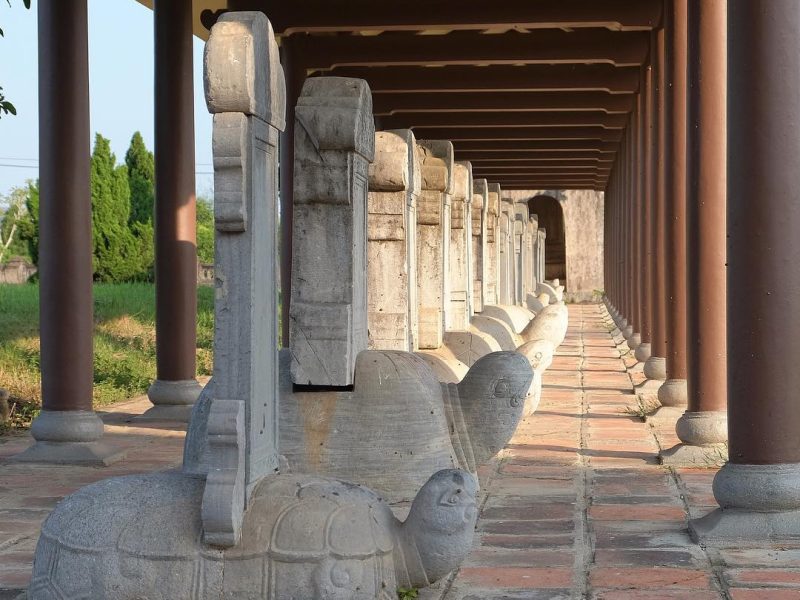
The pathway beyond the main gate leads to smaller structures where emperors and mandarins would prepare before entering the main ceremony hall. The hall, the largest of the remaining structures, was where Confucius and the honored scholars were worshipped. The hall houses two rows of 32 steles, which are stone tablets inscribed with the names of 239 successful candidates from the National Examinations held during the Nguyen Dynasty. These steles are a symbol of Vietnam’s respect for learning and the country’s cultural commitment to intellectual achievement.
Despite the damage caused during wartime, the site remains an important part of Hue’s cultural heritage, offering a glimpse into the educational system of feudal Vietnam.
3. Cultural and Educational Significance of Hue Temple of Literature
The Hue Temple of Literature serves as a testament to Vietnam’s dedication to education, academic excellence, and respect for Confucius’ teachings. This Confucian influence is seen across various Asian cultures, and in Vietnam, the tradition of building Temples of Literature to honor intellectual achievement is deeply embedded. In addition to the Hanoi Temple of Literature, several other cities in Vietnam built their own temples, with Hue’s being one of the most significant due to its historical context and its connection to the Nguyen Dynasty.
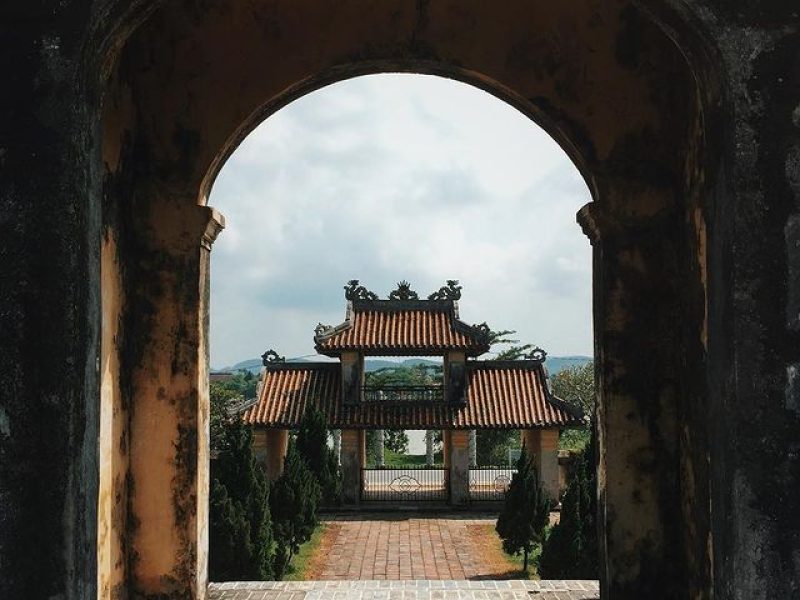
The placement of the doctors’ steles, marking the achievements of scholars from the National Examinations, reflects a reverence for knowledge that has shaped Vietnam’s cultural landscape for centuries. These steles not only highlight the academic achievements of the past but also preserve the memory of Vietnam’s ancient educational system.
Visitors to the temple today are offered a unique window into Vietnam’s academic history. The preservation of the steles ensures that the legacy of the scholars who contributed to Vietnam’s intellectual progress remains a source of inspiration for future generations.
4. What to See at Hue Temple of Literature
Today, the Hue Temple of Literature boasts a collection of about 50 architectural works, with the most significant being the main worshiping hall for Confucius. Visitors can explore the main gate, where the towering pillars stand tall and proud, leading into a courtyard that transports one back in time.
Some highlights of the temple include:
- Confucius Worshiping Hall: The most significant structure within the temple complex, this hall is dedicated to the philosopher Confucius. It is adorned with intricate carvings and relics that offer a glimpse into the ceremonial practices of the Nguyen Dynasty.
- Doctors’ Steles: Lined up in two rows in the temple’s courtyard, these steles inscribed with the names of 239 candidates from the Nguyen Dynasty exams offer a symbolic nod to the importance of education and academic excellence in Vietnam’s history.
- Smaller Worship Halls: These halls were used by emperors and mandarins to prepare before the grand ceremonies honoring Confucius. They offer an intimate view into the ceremonial aspects of Vietnamese royal and academic traditions.
5. How to Get There and Travel Tips
The Hue Temple of Literature is conveniently located near other popular attractions, making it a perfect addition to any tourist’s itinerary. Visitors traveling to the Linh Mu Pagoda can easily include a stop at the Temple of Literature, as the two landmarks are situated along the same route, just 1 km apart.
There are various modes of transportation to reach the temple:
- By Car: Renting a car or hiring a taxi is a convenient option, especially if you are coming from the city center or nearby tourist spots.
- By Motorbike: For a more adventurous experience, tourists can rent motorbikes and ride along the riverbank to the temple.
- By Bicycle: Hue is a bike-friendly city, and cycling to the temple is a pleasant option for those who enjoy a more leisurely pace.
Admission Fee:
Free
Opening Hours: 8:30 AM – 4:30 PM daily.
There are no entrance fees, and the temple is open throughout the week, offering visitors the flexibility to explore at their own pace. The site is not heavily monitored, so tourists can enjoy a peaceful visit without crowds.
6. Conclusion
A visit to the Hue Temple of Literature is a profound journey into Vietnam’s rich educational and cultural history. Whether you’re traveling solo or with family, this site offers an unparalleled glimpse into Confucian traditions and Vietnam’s intellectual legacy. For an even deeper exploration of Hue and other cultural landmarks, consider booking with Vietnam Discovery Tours. Contact us via WhatsApp to plan your customized itinerary and make the most of your Vietnam adventure!