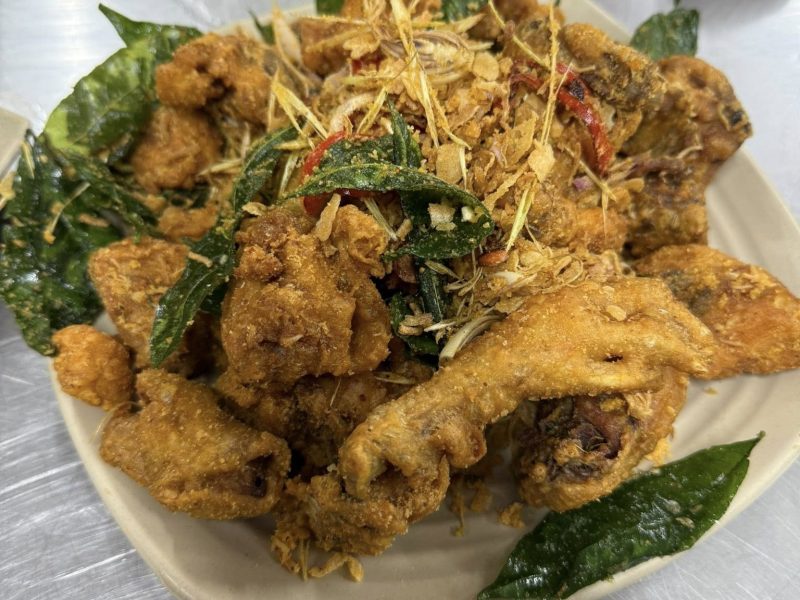
Salt-baked chicken with lime leaves (gà rang muối lá chanh) is crisp-fried chicken tossed with a dry salt mix, lemongrass, ginger, chili and fried lime leaves. Eat it hot, as a beer snack or a side with rice. Here is what goes into it, how it differs from the fish-sauce version, and how to order it well in Vietnam.
What is salt-baked chicken with lime leaves?
Despite the name, the dish is usually fried and then tossed in a hot pan, not baked. The coating is a dry salt mix. Vietnamese home recipes typically roast glutinous rice, mung beans and salt together, then shake the powder over the chicken with lemongrass and lime leaves. The lime leaves are fried until crisp and eaten along with the meat.
Salt-roasted vs fish-sauce fried chicken
You will often see two styles on the same menu, especially at snack shops selling chicken wings and feet. One Hanoi shop covered by VietNamNet has sold both fish-sauce fried and salt-roasted chicken for ten years, making its sauce daily and its salt mix weekly.
| Style | Flavor | Texture | Best with |
|---|---|---|---|
| Rang muối (salt-roasted) | Salty, herbal, lemongrass and lime leaf | Dry, crunchy coating | Cold beer, chili-lime salt |
| Chiên mắm (fish-sauce fried) | Sweet-salty, savory | Sticky glaze | Rice, pickled cucumber |
How to order and eat it
- Eat it hot. The crunch fades fast once the chicken cools.
- Ask for chili-lime salt (muối ớt chanh) or chili sauce on the side if you like heat.
- Eat the lime leaves. They are fried crisp and are part of the dish, not a garnish.
- Order a sharp side. Pickled cucumber or fries, both common at snack shops, cut the richness.
- Share a plate. It is heavy, so one portion between two people is plenty alongside other dishes.
Frequently asked questions
Keep exploring Vietnamese food
More dishes to try next: our guide to the 5 must-try Vietnamese dishes, the 6 iconic dishes, and the best bun cha restaurants. Want a local to take you to the right stalls? See our Hanoi tours.