Van Duc Pagoda in Hoi An is a hidden gem that showcases Vietnam’s profound spiritual heritage and captivating architecture. This tranquil Buddhist site is a must-visit for travelers seeking a deeper connection with Vietnam’s rich cultural legacy. Whether you’re a spiritual seeker or history enthusiast, Vietnam Discovery Tours can guide you to this serene retreat.
1. About Van Duc Pagoda: Location and History
Van Duc Pagoda is located in Cam Ha Commune, approximately 5 kilometers from Hoi An Ancient Town, resting along the peaceful right bank of the De Vong River. This tranquil sanctuary, surrounded by lush willows and vibrant fruit trees, offers visitors a serene atmosphere to reflect and experience Buddhist spirituality. The pagoda occupies a secluded 600-square-meter plot of land amidst about 6 hectares of natural beauty, making it an ideal retreat for those seeking peace and spiritual rejuvenation.
Originally built as a humble bamboo structure, Van Duc Pagoda has undergone multiple reconstructions, evolving into the grand religious complex that stands today. The first major transformation occurred in the early 18th century under Monk Thuc Khoan, who replaced the bamboo with brick and lime. By the late 18th century, Monk Pho Triem led an extensive renovation, adding several key architectural elements like the front hall and rear chamber, while maintaining its traditional alignment facing the northeast. Later, in the early 20th century, Monk Hoang Nhon made another significant adjustment, reorienting the structure to face southwest, thus establishing its modern-day layout.
2. How Van Duc Pagoda Was Built: Architectural Design and Materials
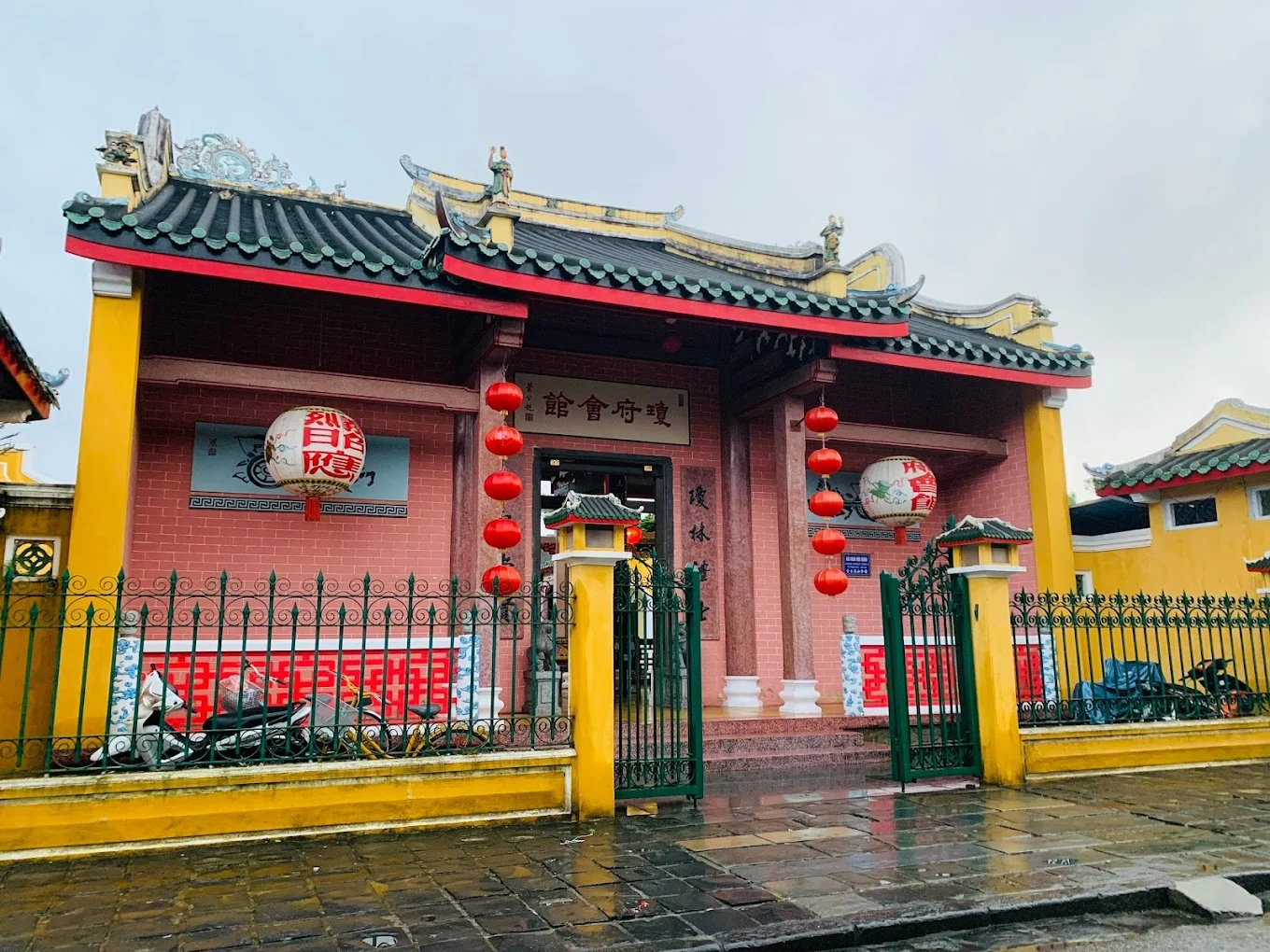
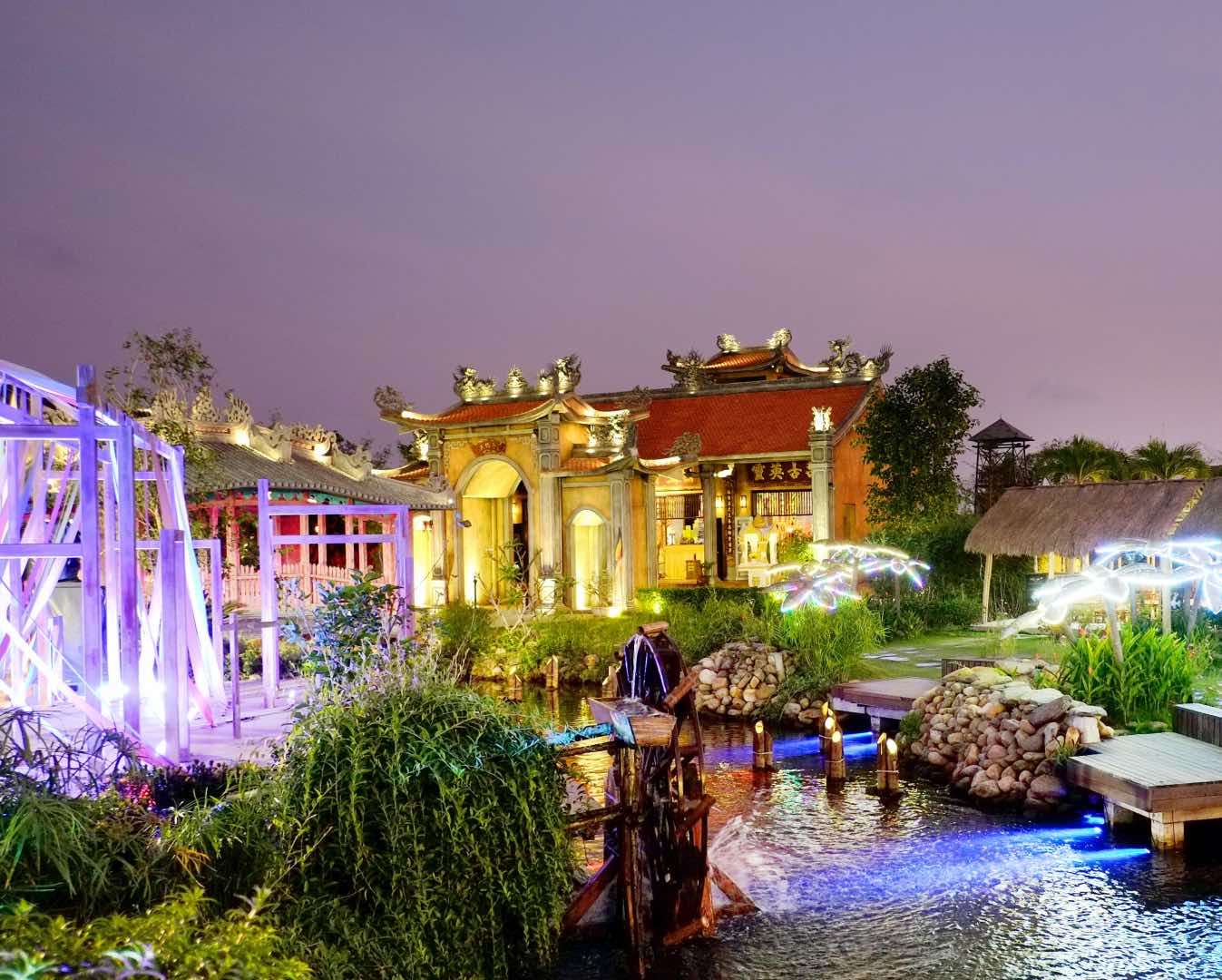
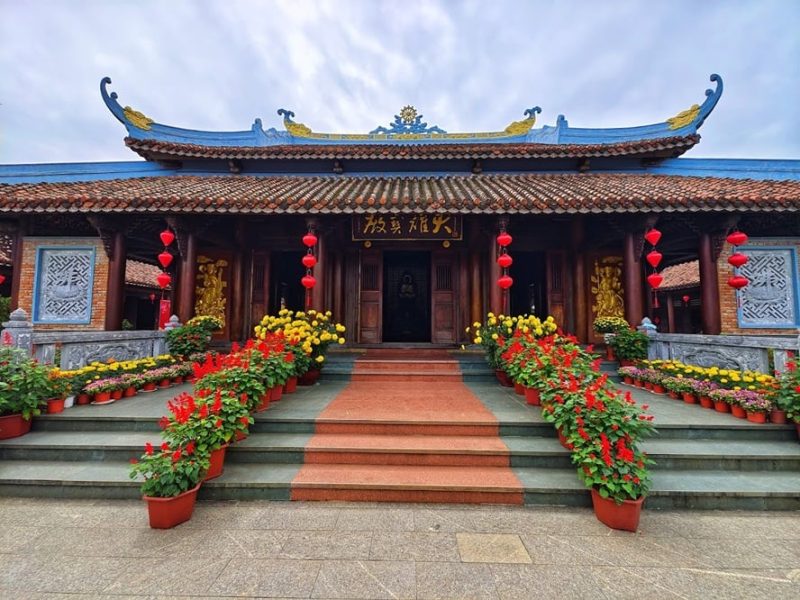
Van Duc Pagoda’s current structure is a stunning representation of Vietnamese Buddhist architecture. The pagoda follows a U-shaped design, with interconnected sections that include a front hall, main sanctuary, rear chamber, east and west wings, monks’ quarters, and a kitchen. This interconnected layout allows for the seamless flow of religious activities, creating a harmonious spiritual atmosphere for visitors and devotees alike.

The pagoda’s materials reflect its rich history, originally constructed from lime, wood, and brick, with later restorations introducing cement to reinforce the structure. Despite these updates, the overall design has remained faithful to traditional architectural aesthetics. The roof is particularly notable for its yin-yang style tiling, with curved ridges adorned with intricate carvings of mythical creatures like dragons, lions, turtles, and phoenixes. These motifs symbolize strength, wisdom, and protection, echoing the spiritual significance of the pagoda itself.
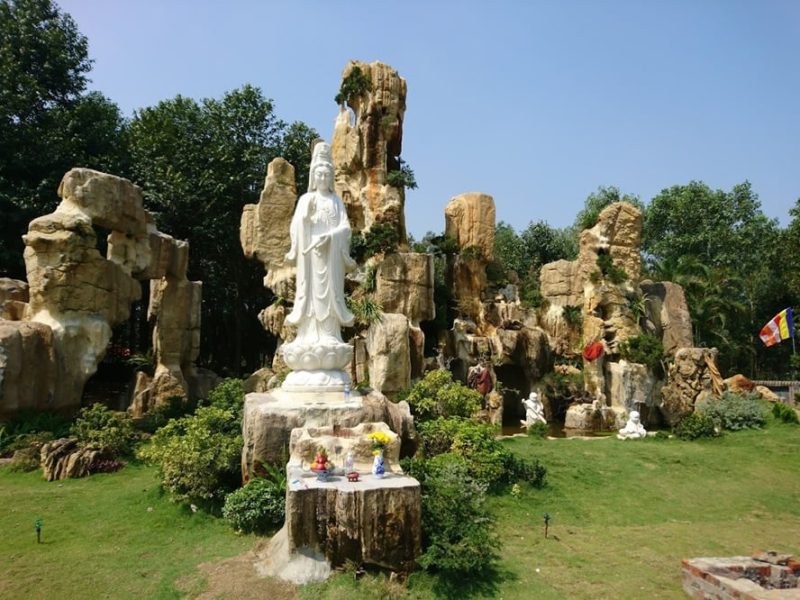
Inside Van Duc Pagoda, visitors are treated to an impressive collection of statues, many of which hold significant artistic and religious value. Most of the statues, including representations of Buddha figures like Amitabha, Shakyamuni, and Maitreya, are crafted from a composite material. Other deities, such as Avalokiteshvara and Mahasthamaprapta, are elaborately gilded and painted, showcasing the detailed craftsmanship that went into their creation.
3. Cultural Significance and Artifacts
Van Duc Pagoda is not only an architectural masterpiece but also a repository of valuable cultural and historical artifacts. Among its most prized possessions are 115 wooden printing blocks used for reproducing ancient Buddhist texts. These blocks, varying in size from 44.5 to 78.5 centimeters, are carved with intricate Chinese characters and images of sacred deities. Some of the blocks date back to 1482, adding to the historical value of the pagoda’s collection.
In addition to the wooden blocks, the pagoda also houses several other significant relics. One of the most remarkable is a large bronze bell standing 1.2 meters tall and adorned with dragon-shaped handles. This bell is not only a functional item for religious ceremonies but also a symbol of the pagoda’s deep connection to Vietnam’s spiritual heritage. Other notable artifacts include ceramic items from the Ming and Qing dynasties, such as plates, cups, and incense burners, which further emphasize the cultural importance of Van Duc Pagoda.
4. Best Time to Visit Van Duc Pagoda
The best time to visit Van Duc Pagoda is during one of the many vibrant Buddhist festivals that are celebrated throughout the year. Major events include the Buddha’s Birthday, celebrated on the 15th day of the 4th lunar month, and Avalokiteshvara Day on the 19th day of the 6th lunar month. These festivals bring the pagoda to life, with colorful decorations, lively ceremonies, and throngs of devoted pilgrims paying their respects. Another important festival is the Vu Lan Festival, observed on the 15th day of the 7th lunar month, when Buddhists honor their ancestors and departed loved ones.
In terms of weather, the ideal time to visit is between February and April, when Hoi An experiences mild temperatures and relatively dry conditions. During this period, visitors can fully appreciate the beauty of the pagoda and its surroundings without the disruption of heavy rains.
5. How to Reach Van Duc Pagoda
Reaching Van Duc Pagoda from Hoi An Ancient Town is relatively straightforward. The pagoda is located about 5 kilometers from the town center, making it a convenient destination for a day trip. Start your journey on Nguyen Phuc Tan Street, then continue onto Cao Hong Lanh Street. From there, merge onto Hung Vuong Street and follow the road until you reach Nguyen Tat Thanh Street (also known as Road DT607). Continue on this route before turning onto Huynh Thuc Khang Street, which leads to Trang Keo 1 Street. Finally, turn onto Cam Ha Street, where you’ll find Van Duc Pagoda.
6. Conclusion
Van Duc Pagoda is a must-see destination for travelers seeking to immerse themselves in Vietnam’s rich spiritual heritage. Its unique architecture, historical significance, and serene atmosphere make it a perfect retreat for reflection and exploration. For those interested in planning their visit, Vietnam Discovery Tours offers tailored experiences, ensuring a memorable journey. Reach out via WhatsApp for more details and personalized travel advice.
This comprehensive guide provides all the necessary details to make Van Duc Pagoda a central highlight of any visit to Hoi An, offering both historical depth and cultural significance.