Explore the Mausoleum of Emperor Minh Mang, one of Hue’s most well-preserved historic sites. Nestled amidst lush landscapes, this mausoleum is a testament to Vietnam’s rich imperial history and architectural grandeur. A visit here, guided by Vietnam Discovery Tours, offers an in-depth journey into the past, revealing the cultural and spiritual legacy of the Nguyen Dynasty. Discover this iconic site and immerse yourself in the heritage of Hue.

1. Where is the Mausoleum of Emperor Minh Mang? How to Get There?
The Mausoleum of Emperor Minh Mang, also known as Minh Mang Tomb, is located in the lush surroundings of the Huong River, about 12 kilometers from Hue’s city center. This serene and historically significant site is one of the most visited royal tombs in Vietnam.
Address: Hương Thọ, Hương Trà District, Thua Thien Hue Province, Vietnam.
- Opening hours: 7:00 am – 5:00 pm every day
- Entrance fee: 150,000 VND for adults, 30,000 VND for children
Getting There:
- By Car/Taxi: A 20-minute drive from Hue city center. It’s the most convenient option, with costs ranging from 150,000 to 200,000 VND (approximately $6-$8 USD).
- By Motorbike: Ideal for those who prefer a more adventurous route. You can rent a motorbike in Hue for around 100,000 VND (approximately $4 USD) per day.
- By Boat: For a more scenic experience, take a boat trip along the Perfume River. The cost for a boat tour varies, generally starting from 500,000 VND (approximately $20 USD) depending on the tour package.
- By Tour Bus: Many tour operators in Hue offer half-day or full-day tours that include a visit to the Mausoleum of Emperor Minh Mang.
2. Overview of the History and Architecture of the Mausoleum of Emperor Minh Mang
2.1. The History of Minh Mang Tomb Hue
Emperor Minh Mang, the second emperor of the Nguyen Dynasty, ruled from 1820 to 1841. Known for his strong Confucian beliefs and his role in consolidating Vietnam’s territory, Minh Mang left a significant legacy. The construction of his tomb began in 1840 and was completed by his son, Emperor Thieu Tri, in 1843, two years after Minh Mang’s death. The tomb is a reflection of the emperor’s strict principles, with a layout that symbolizes a harmonious balance between man and nature.
2.2. The Architecture of Minh Mang Tomb Hue
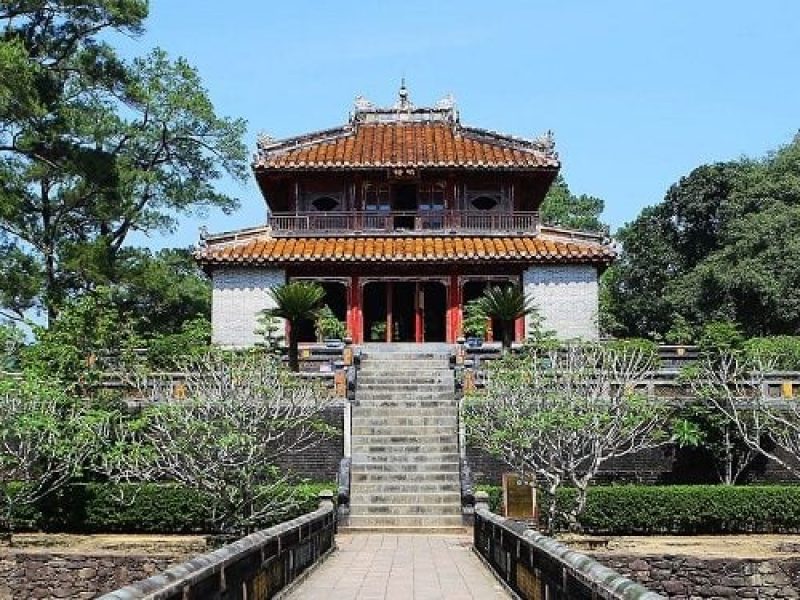
The architecture of Minh Mang Tomb is a blend of traditional Vietnamese elements with profound philosophical meanings. The tomb complex spans an area of 18 hectares and includes about 40 structures, all symmetrically arranged along a central axis. The overall design represents a perfect blend of nature and artificial structures, symbolizing the emperor’s philosophy of life.

Key Architectural Features:
- Symmetry and Balance: The layout is symmetrical, with the central axis running through key structures like the Dai Hong Mon Gate, Bai Dinh Yard, and Minh Lau Pavilion.
- Traditional Vietnamese Style: The tomb’s architecture features curved roofs, intricate carvings, and red lacquered pillars.
- Natural Elements: The tomb is surrounded by lakes, gardens, and pine forests, creating a serene environment that reflects Minh Mang’s love for nature.
3. TOP 7 Outstanding Attractions in the Mausoleum of Emperor Minh Mang
3.1. Dai Hong Mon Gate
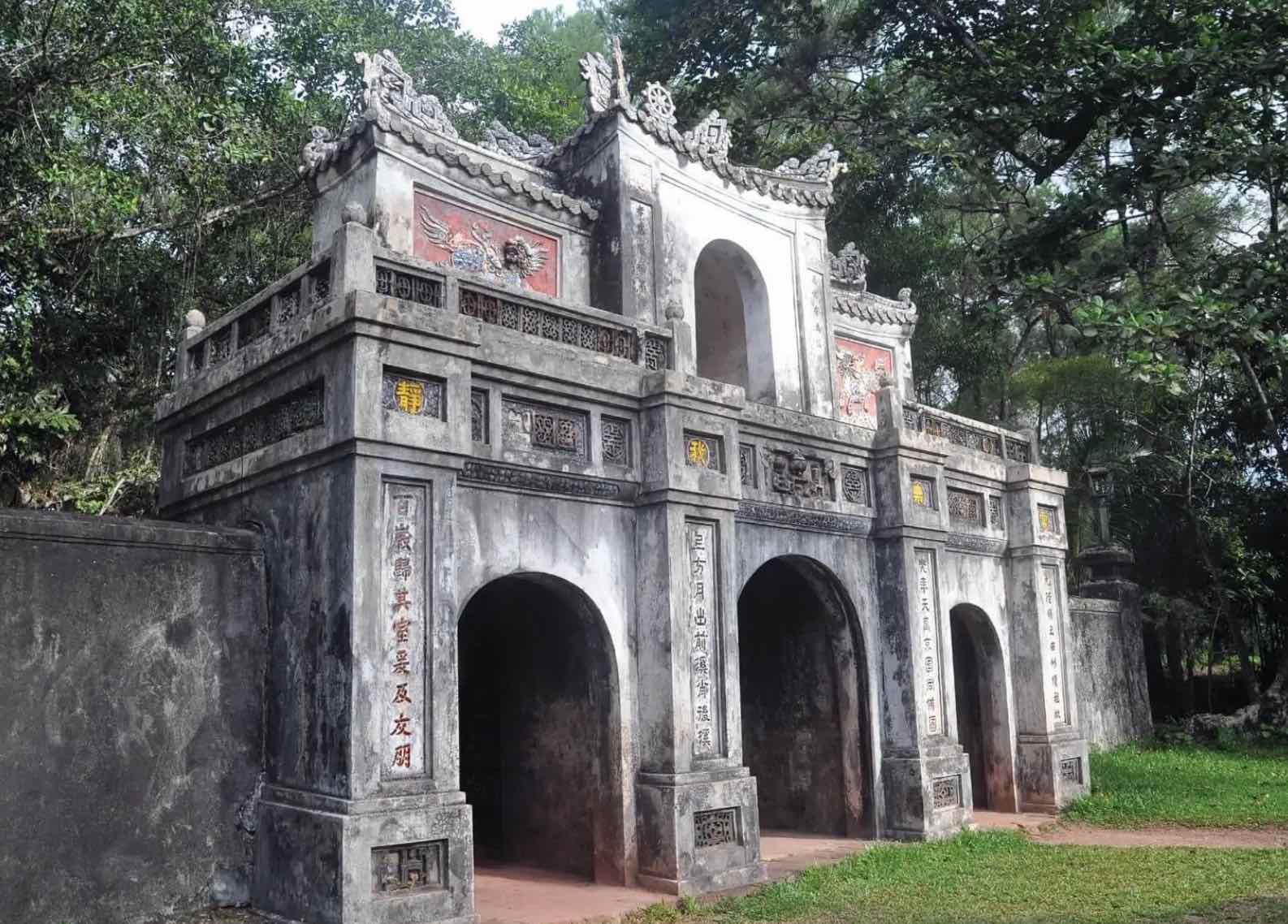
Dai Hong Mon Gate is the main entrance to the tomb and a symbolic structure that marks the beginning of the journey through the mausoleum. The gate, made of stone, features intricate carvings and represents the grandeur of the emperor.
- Notable Features: The gate consists of three entrances, with the central door reserved for the emperor’s spirit. The two side doors were used by mandarins and royal guards during ceremonies.
3.2. Bai Dinh Yard
Bai Dinh Yard is a large courtyard leading to the main tomb area. It is flanked by stone statues of mandarins, elephants, and horses, symbolizing the emperor’s royal entourage.
- Significance: The courtyard is an open space that creates a sense of grandeur and tranquility, preparing visitors for the solemnity of the tomb ahead.
3.3. Minh Lau Pavilion
Minh Lau Pavilion, also known as the Pavilion of Light, is a three-story structure that offers panoramic views of the surrounding landscape. It was designed for the emperor’s spirit to rest and enjoy the natural beauty.
- Design: The pavilion is constructed on a square base, with a roof adorned with dragon motifs, representing imperial power and protection.

3.4. Hieu Duc Mon Gate and Sung An Palace
Hieu Duc Mon Gate leads to Sung An Palace, the main building where the emperor’s tablets are housed. This area is the spiritual heart of the tomb complex.
- Interior: The palace features elaborate altars, lacquered in red and gold, where offerings were made to the emperor’s spirit.
3.5. Tan Nguyet Lake
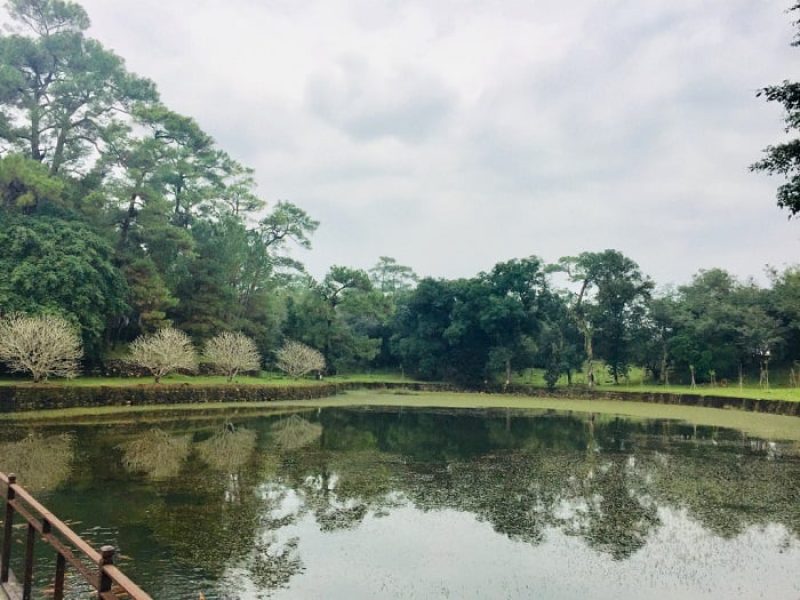
Tan Nguyet Lake, or the Crescent Moon Lake, is an artificial lake that surrounds the central tomb area. The lake’s shape symbolizes the embrace of nature, a theme central to the tomb’s design.
- Experience: Visitors can stroll along the lake’s edge, enjoying the peaceful atmosphere and reflecting on the emperor’s connection to the natural world.
3.6. Thong Minh Chinh Truc Bridge
This elegant stone bridge crosses Tan Nguyet Lake, leading to the final resting place of Emperor Minh Mang. The bridge, with its simple yet graceful design, adds to the tomb’s harmonious layout.
- Symbolism: The bridge represents the passage from the earthly world to the spiritual realm, a journey of reflection and reverence.
3.7. Hien Duc Mon Gate
Hien Duc Mon Gate is the final gate leading to the emperor’s tomb. This gate marks the transition to the most sacred part of the complex, where only select individuals were allowed.
- Design: The gate is adorned with elaborate carvings and serves as a solemn reminder of the emperor’s enduring legacy.
4. What to Note for Your Visit to the Mausoleum of Emperor Minh Mang?
- Entrance Fee: The entrance fee to the mausoleum is approximately 150,000 VND (around $6 USD) per person. Discounts are available for students and children.
- Opening Hours: The mausoleum is open daily from 7:00 AM to 5:30 PM. It’s advisable to visit early in the morning to avoid the midday heat.
- Dress Code: Visitors should dress respectfully, covering shoulders and knees, as this is a sacred site.
- Guided Tours: Consider hiring a local guide to gain deeper insights into the history and symbolism of the tomb. Many tours include this in their packages.
- Best Time to Visit: The best time to visit is during the dry season, from March to September, when the weather is more favorable for exploring outdoor sites.
- Photography Tips: The mausoleum offers many picturesque spots, especially around the lakes and gardens. Early morning or late afternoon light is ideal for capturing the serene beauty of the site.
Conclusion
Visiting the Mausoleum of Emperor Minh Mang offers a unique glimpse into the grandeur of Vietnam’s imperial history and architectural brilliance. As you explore this well-preserved site, you’ll gain a deeper appreciation for the Nguyen Dynasty and its cultural legacy. With Vietnam Discovery Tours, your experience is enriched by expert guidance, ensuring you don’t miss any of the mausoleum’s remarkable features. Whether you’re captivated by the intricate designs, serene landscapes, or historical significance, this visit will leave you with lasting memories. For more information or to plan your visit, contact Vietnam Discovery Tours via WhatsApp for personalized assistance and recommendations. Don’t miss the chance to explore this iconic site in Hue with the best in the business.