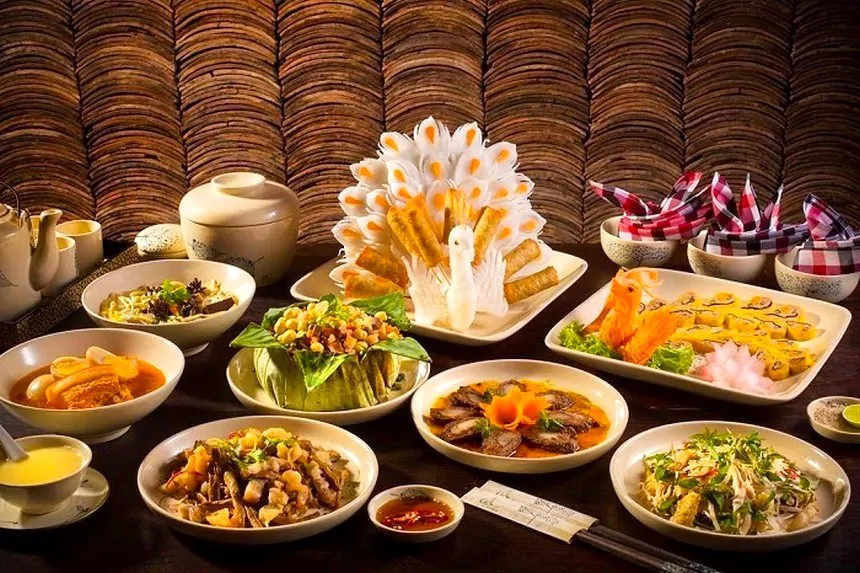
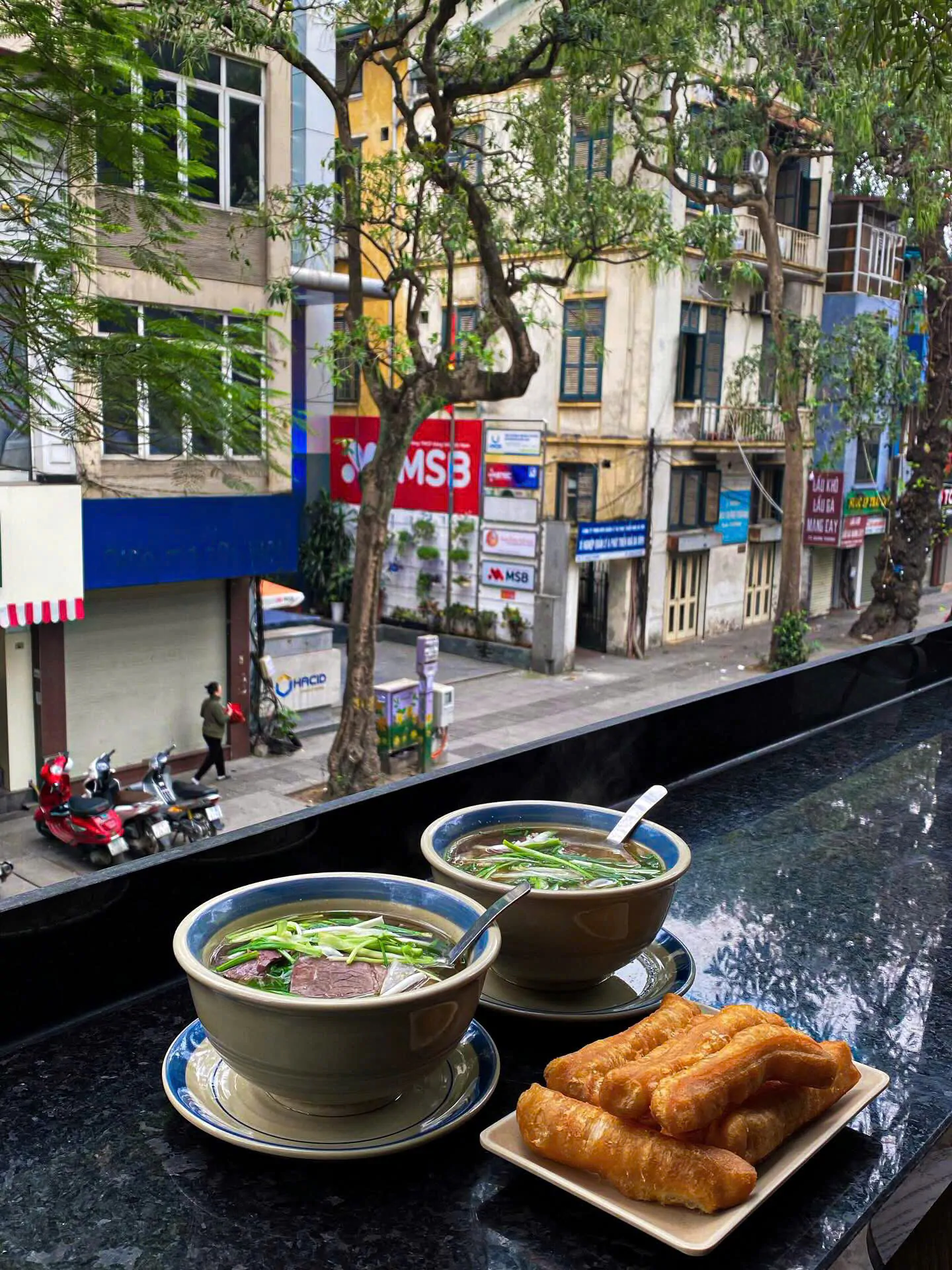
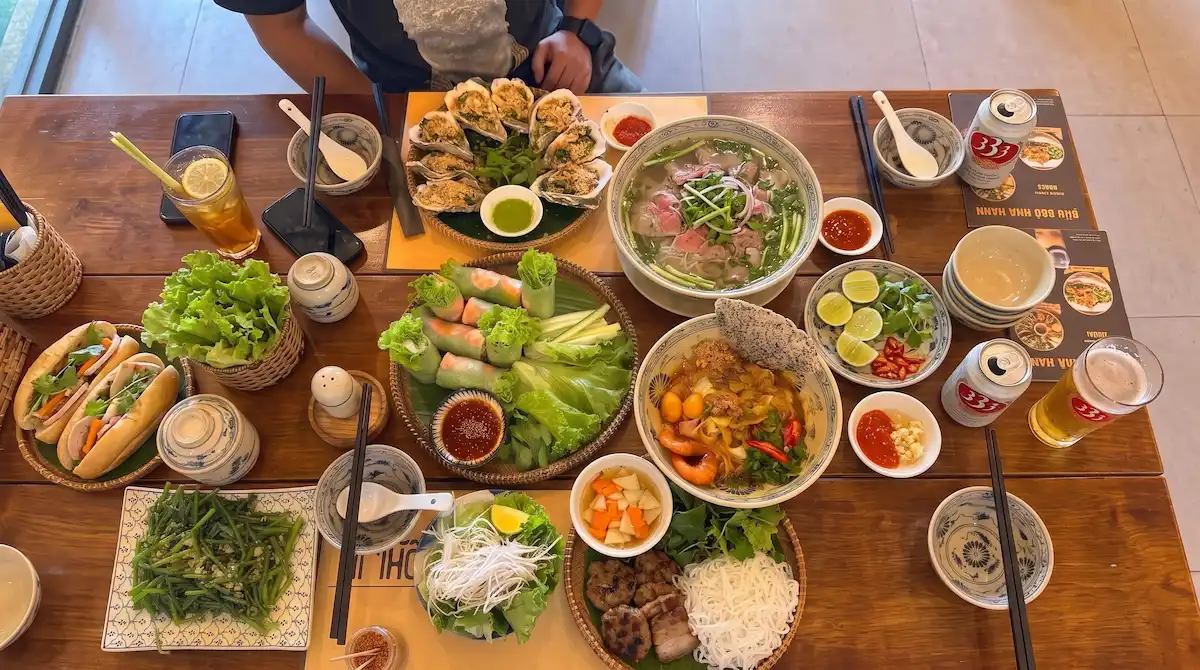
If this is your first trip to Vietnam, throw away the rigid sightseeing checklist. The real itinerary starts with food. Vietnam is a country you taste your way through — from steaming bowls on plastic stools to crackling baguettes wrapped in paper. Below are the 5 must-try Vietnamese dishes every traveler should eat at least once, why locals love them, where to find the best versions, and roughly how much they cost.
1. Pho – Vietnam’s Iconic Noodle Soup {#1-pho}
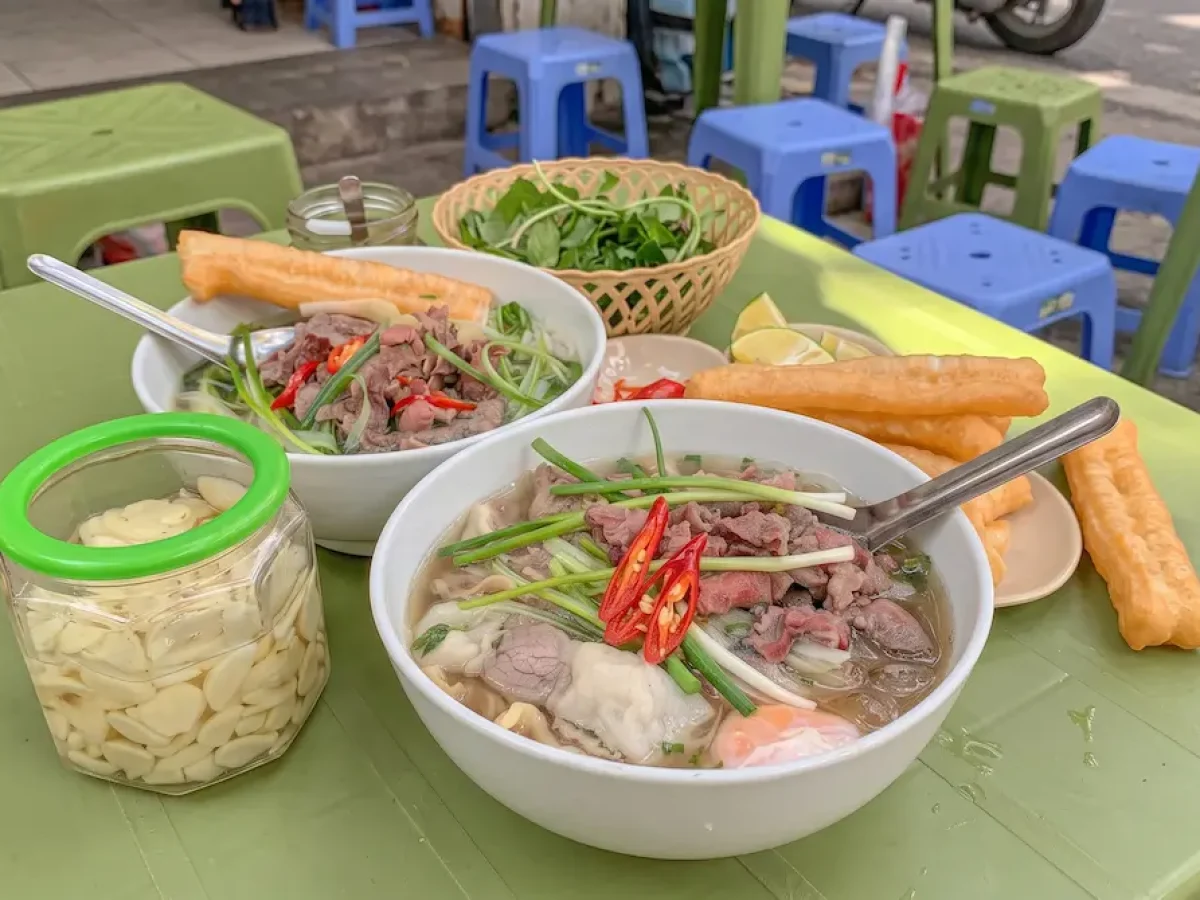
What it is: A bowl of soft rice noodles in a clear, deeply aromatic broth simmered for hours with star anise, cinnamon, and charred ginger, topped with thin slices of beef or chicken.
Why try it: Pho is more than breakfast — it’s a daily ritual. Locals eat it perched on low plastic stools at sidewalk stalls, often before 8am. The broth is the real star: light in color but rich in flavor, balanced with fresh herbs, lime, and chili on the side.
Where to try it: Hanoi’s Old Quarter is considered the birthplace of Pho — look for stalls without English menus, they’re usually the most authentic. On a Hanoi city tour, ask your guide to take you to a local favorite rather than a tourist-facing restaurant.
Price range: 35,000–55,000 VND (~$1.5–2.5 USD) per bowl at local stalls.
Traveler tip: Add a crispy quay (fried dough stick) and dip it into the hot broth — a small ritual that makes the bowl feel complete.
2. Banh Mi – The King of Street Food Sandwiches {#2-banh-mi}
What it is: A crusty Vietnamese baguette (lighter and airier than a French one) filled with pâté, mayonnaise, cold cuts or grilled pork, pickled carrot and daikon, cucumber, chili, and fresh cilantro.
Why try it: Banh Mi regularly ranks among the world’s best street food, and the reason is texture and balance — a shattering crust, creamy pâté, tangy pickles, and fresh herbs all in one bite. It’s the perfect grab-and-go meal between sightseeing stops.
Where to try it: Hoi An and Hanoi both have legendary Banh Mi stalls. Many travelers on a Hoi An tour plan a stop specifically for it.
Price range: 20,000–35,000 VND (~$1–1.5 USD).
Traveler tip: Ask for “không cay” (no chili) if you prefer it mild, or “cay” if you want it spicy.
3. Bun Cha – Hanoi’s Legendary Lunch {#3-bun-cha}
What it is: Grilled minced-pork patties and slices of pork belly served in a warm, sweet-and-sour fish sauce broth, alongside a plate of rice vermicelli and fresh herbs.
Why try it: Bun Cha became internationally famous after being featured in a well-known culinary TV segment, but Hanoians have eaten it for generations, usually at lunchtime. The charcoal-grilled pork gives off a smoky aroma that fills entire streets around midday.
Where to try it: This is a Hanoi specialty through and through — best enjoyed at a local eatery during a Hanoi Old Quarter walk.
Price range: 40,000–60,000 VND (~$1.7–2.5 USD).
Traveler tip: Mix everything into the dipping bowl rather than eating each component separately — that’s how locals do it.
4. Goi Cuon – Fresh Spring Rolls {#4-goi-cuon}
What it is: Translucent rice paper rolls filled with shrimp, boiled pork, vermicelli noodles, and fresh herbs — served cold with a rich peanut-hoisin dipping sauce.
Why try it: Unlike deep-fried spring rolls, Goi Cuon is light, fresh, and served raw-wrapped — a refreshing contrast to Vietnam’s heat and humidity. It’s also one of the easiest Vietnamese dishes for first-timers and picky eaters.
Where to try it: Found almost everywhere in Vietnam, but especially good in the Mekong Delta and Ho Chi Minh City, where herbs and shrimp are at their freshest.
Price range: 25,000–45,000 VND (~$1–2 USD) for 2–3 rolls.
Traveler tip: This is one of the easiest Vietnamese dishes to find in a vegetarian or vegan version — just ask for “chay” (vegetarian).
5. Bun Bo Hue – Spicy Beef Noodle Soup from the Imperial City {#5-bun-bo-hue}
What it is: A bold, reddish-orange broth flavored with lemongrass and fermented shrimp paste (mam ruoc), served with thick chewy rice noodles, beef shank, pork trotter, and sometimes congealed pig’s blood.
Why try it: If Pho is gentle, Bun Bo Hue is its fiery cousin from the former imperial capital of Hue. It’s spicier, richer, and more intense — a dish for travelers who want to taste Central Vietnam’s bold culinary identity.
Where to try it: Best enjoyed in Hue itself, or on a Hue tour where local guides know the family-run stalls that have served it for decades.
Price range: 35,000–55,000 VND (~$1.5–2.5 USD).
Traveler tip: Squeeze in fresh lime and add chili oil (sa te) gradually — the broth is spicier than it looks.
Frequently Asked Questions About Vietnamese Food {#faqs}
What is the most popular dish in Vietnam? Pho is Vietnam’s most internationally recognized dish, but locals eat a wide variety of noodle soups, rice dishes, and street food daily depending on the region and time of day.
Is Vietnamese street food safe for tourists? Yes, in general — choose stalls with high turnover (crowded with locals), freshly cooked food, and bottled or boiled water. Most travelers have no issues sticking to busy, popular spots.
What is the best city in Vietnam for food? Hanoi and Hoi An are widely considered the top food destinations, though Hue and Ho Chi Minh City each have their own distinct culinary identity worth exploring.
Are there vegetarian versions of these dishes? Yes. Goi Cuon, Bun Cha, and even Pho all have widely available vegetarian (“chay”) versions using tofu and mushrooms instead of meat.
How much does street food cost in Vietnam? Most dishes cost between 20,000–60,000 VND (roughly $1–2.5 USD), making Vietnamese street food some of the most affordable good food in Southeast Asia.
Ready to Taste Vietnam for Yourself?
Reading about these dishes is one thing — eating them fresh off a charcoal grill on a Hanoi side street is another. Explore our Vietnam food & drink guides or plan a custom food-focused itinerary with a local guide who knows exactly which stalls locals actually eat at.